Table Of Content
These products provide a designated area for your dog to go potty inside the house, making it easier to manage accidents and prevent messes on your floors. As dogs age, they develop changes in their brain and can experience a gradual decline in their cognitive function. Hallmarks of cognitive decline include disorientation and a loss of previously learned behaviors. Some dogs are not able to find their way to the door, while others forget to signal their need to eliminate.
How is incomplete house training or house-training lapse treated?
However, with the right strategies and a little patience, you can stop your dog from peeing in the house and enjoy a clean and odor-free home. Alternatively, if your dog is having other symptoms along with the urinary accidents and/or the urine looks or smells different, then it is likely a medical issue. It may be helpful to keep a journal to track your dog’s diet and elimination behaviors. That way, you can easily detect which interventions lead to improvement.
What to Do If Your House-Trained Dog Starts Peeing Indoors
For example, ‘submissive urination’ is a habit which occurs when a dog is intimidated by another person or dog. Changes at home – like moving or a new family member – can also cause stress for pets, who may use urination as a marking technique. Cystitis is an inflammation of the bladder and can be caused by several diseases and conditions.
×Do you know the best pet for your personality?
Or, worse, your adult canine looks you squarely in the eye and urinates in front of you. Anyway, my husband and I have both researched this online and know it can go for up to 28 days. There are many characteristics during heat and one issue is that she has been peeing by the side of my bed, something she’s done at least three times. She is 8 months old, in good health and according to our vet, in her first heat. I’ve had dogs for over 40 years, but the first female in heat for the duration.
Reasons Dogs Have Panic Attacks and How You Can Help - Newsweek
Reasons Dogs Have Panic Attacks and How You Can Help.
Posted: Wed, 07 Apr 2021 07:00:00 GMT [source]
Your vet will always give you all the expected side effects when prescribing drugs to your dog. Some drugs e.g., corticosteroids will make your dog have increased thirst and urination which can go overboard. You can suspect if your dog is suffering from this condition if they infrequently pass small puddles of urine when they sit or sleep. Tracking your dog's movements with a GPS Dog Collar can provide insights into their behavior and triggers. By understanding where and when your dog is acting out, you can pinpoint the exact cause and correct it.
This can cause urinary accidents as your dog forgets where they are supposed to pee. If your dog tolerates wearing doggy diapers or belly bands indoors, these might save you some serious cleanup. Providing mental stimulation with exercise, interactive toys, and taking your dog on frequent outings may relieve their urge to urinate indoors. You can also try using waterproof pads or washable bedding while they sleep. Accidents happen, but as a dog owner, there are two things that no one likes to witness. First, immediately after an outdoor bathroom break, your dog comes into the house and dribbles urine across the floor.

Treating Urinary Incontinence
This procedure often reduces hormone-driven behaviors such as aggression, roaming, and marking. If they can’t identify the problem, look for emotional and behavioral triggers and try and solve them, and then commit time to re-training your dog on where they should be peeing. It is annoying when your dog decides to start peeing in the house, but it is not a reason to get angry or punish your dog. While dogs may pee in the house for a variety of reasons, seeking attention is not usually one of them.
Incontinence Caused by Fear or Stress
Any dog who is feeling anxious or fearful may have urinary accidents. For some dogs, anxiety may be related to a specific situation, like hearing loud fireworks or dealing with new visitors (whether they are animals or humans). Even for adult dogs, being verbally reprimanded for “bad” behavior can elicit an anxiety/fear response. Before doing anything else, take your dog to the veterinarian to rule out any medical causes for the behavior.
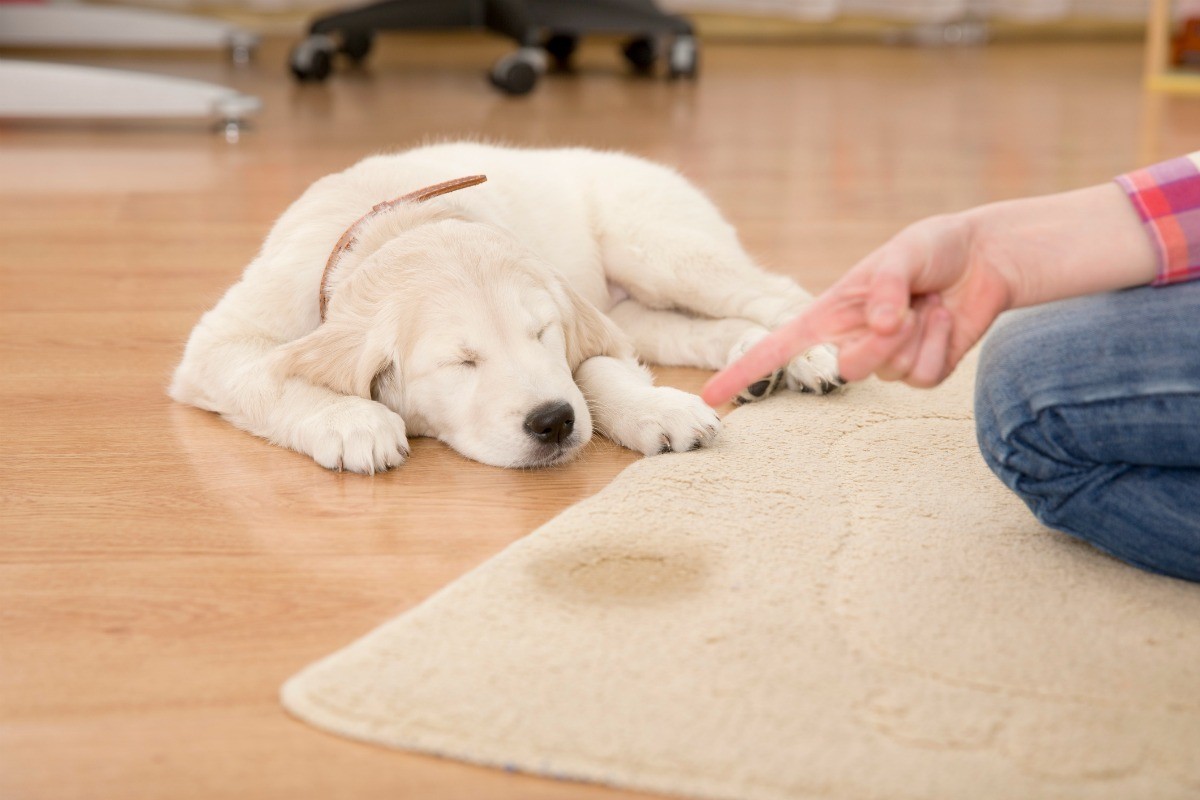
You can also use positive reinforcement, treats, or playtime to encourage your dog to brave the elements and go potty outside. To help uncover whether the issue is medical or behavioral, there are several things you can check at home in addition to consulting with your dog’s veterinarian. Figuring out if your best friend has a behavioral or medical issue causing them to pee in the house can be frustrating. Be patient with your dog and do not punish them in any way (yelling, scolding, confining to a crate, hitting, rubbing their nose in the pee, etc.).
In older dogs, urinary tract cancer in the bladder or in the tubes that carry urine is also a possibility. There can be many different scenarios when it comes to peeing accidents. You may have a young adult dog that’s acting like her usual, playful self with no obvious concerns, but she starts leaving puddles of pee in different areas of the house. Or you may have a senior dog suddenly peeing inside the house, but he’s straining to urinate, and his pee is also bloody. Addressing any underlying issues and implementing consistent training techniques can help improve your dog’s behavior over time. – Pee pads and artificial grass patches can be useful for indoor potty training, especially for pet owners who live in apartments or have limited outdoor space.
Many of these issues can have vague symptoms, so we always suggest having them assessed by a veterinarian if you think a medical condition is to blame. This can be a result of chronic medical conditions, loss of bladder muscle control, bladder stones, and even bladder tumors. Sudden accidents in the home should always warrant your concern, as most adult dogs prefer to stick to the routine of going outdoors. Unless there is an obvious trigger such as being frightened or being left alone for a long period of time, this is not normal for a potty trained dog. Some drugs can cause the dog to relieve himself more often and trigger house-training accidents. Talk to your veterinarian about any possible side effects related to the medicine.
Oftentimes these issues will resolve once your pup adjusts, but we suggest keeping a close eye on them as they get used to the transition. If there have been any major shifts in your home setting, this could be the cause of your dog’s sudden accidents. Even something as simple as rearranging your furniture can throw things off for a pup, causing them to experience slight changes in behavior as a result. Not only will it not work, it may cause the dog to urinate behind the sofa or other hidden places, making your detecting job all the more difficult. Submissive urination is a common behavior in puppies but they usually mature out of it as they become adults. Dogs have carried this behavior to their human family and will sometimes urinate in response to fear or submission to your authority.
But Dr. Caos says these items only temporarily manage accidents without resolving the underlying issue. If your male dog has suddenly started peeing inside, revisiting housebreaking methods might be the solution. Electrolyte imbalances, especially those involving sodium or salt, can lead to excessive thirst and increased urination in dogs.
It's a tricky lesson to emphasize to your pet that he must do his business outside — and only outside! House training may be more difficult when you allow your dog to sometimes relieve himself in a designated area indoors, on a puppy training pad, for example. If you diligently housetrained your dog and it has been consistently doing its business in the yard at proper times, it should be noted that incontinence is not a housetraining issue. Even if you missed a few steps in potty training or the process took longer than you anticipated, “forgetting” potty training likely isn’t the culprit. Another reason why a dog may pee in the house is due to anxiety or stress. Changes in the household, such as a new pet or a move to a new home, can trigger anxiety in dogs and cause them to exhibit undesirable behaviors like peeing indoors.
Dogs, however, are creatures of habit and may struggle with sudden changes to their routines. If there are signs of a physical problem, please get your dog examined by your veterinarian just as soon as you can. The quicker you get a diagnosis, the easier it will be to treat the problem. You don’t need a whole jar of urine, most tests only need two or three milliliters.




No comments:
Post a Comment